Collagen Supplements: Benefits, Types, How They Work and What to Look For
An in-depth guide to collagen, healthy aging, supplement research and choosing the right collagen product.
By My Gut Health Matters | Estimated reading time: 12–15 minutes
Affiliate disclosure: My Gut Health Matters is an independent Amare Brand Partner. If you purchase through links in this article, I may earn a commission at no additional cost to you. This does not influence our commitment to providing informative and transparent content.
Introduction: Why Is Everyone Talking About Collagen?
Collagen has become one of the most talked-about ingredients in the health and wellness industry. From skincare products and beauty supplements to protein powders and functional beverages, it seems to be everywhere.
But what is behind the growing interest?
For many people, the search for collagen begins with a question about aging. Perhaps they have noticed changes in their skin, are researching ways to support healthy joints, want to understand the relationship between nutrition and hair and nail health, or are simply interested in maintaining an active lifestyle as they get older.
Whatever brings someone to the subject, the questions are often similar:
- What exactly is collagen?
- Why does the body need it?
- Does natural collagen production change with age?
- What are the different types of collagen?
- Are marine and bovine collagen different?
- What should you look for when choosing a supplement?
- Are collagen powders, capsules and drink mixes equally convenient?
- What does the research actually say?
These are worthwhile questions, particularly because the collagen supplement market is crowded with products making different claims.
In this guide, we’ll explore collagen from the ground up, explain the science behind the ingredient, examine what people commonly research, and look at what to consider before choosing a supplement.
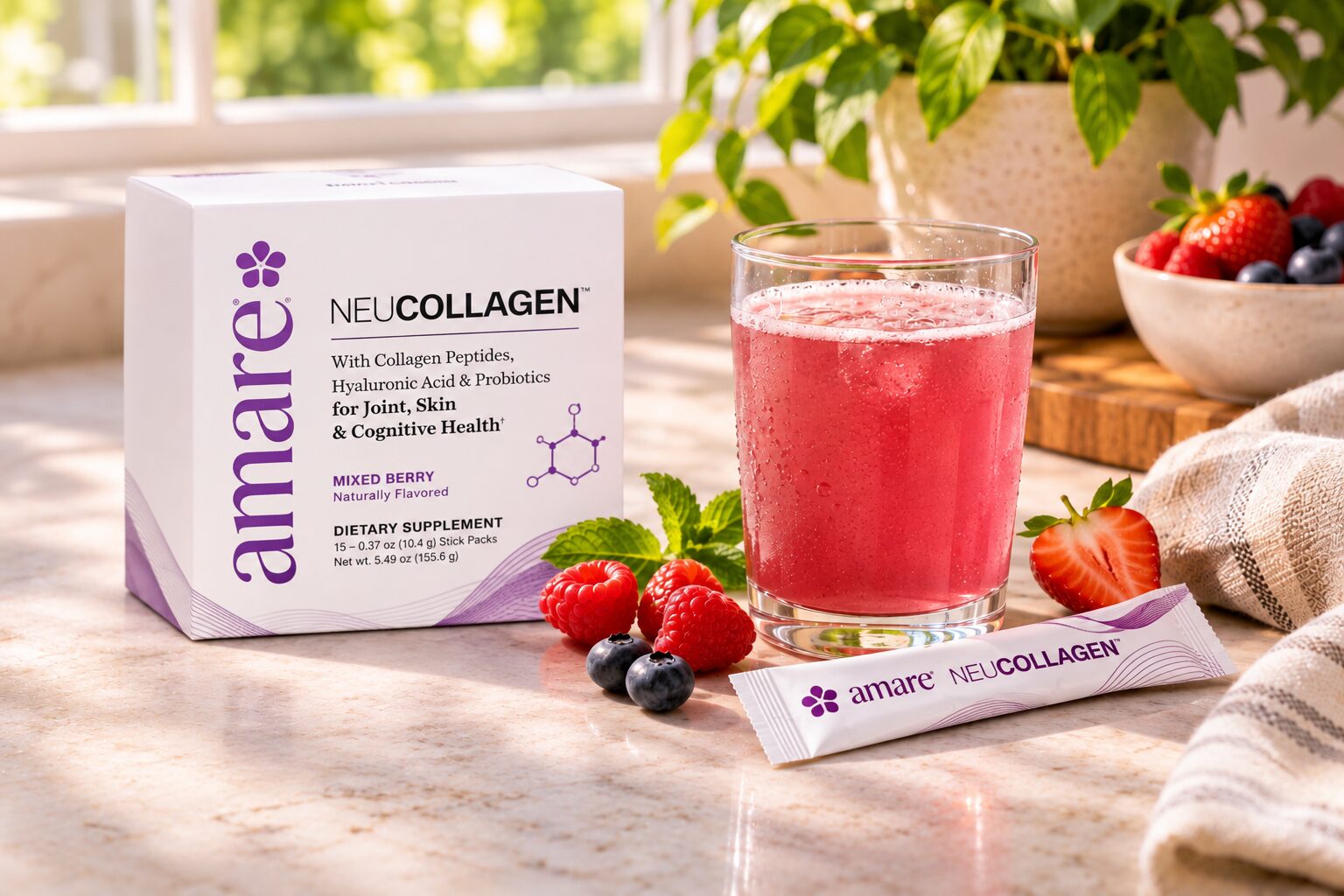
We’ll also take a closer look at Amare NeuCollagen, a multi-source collagen drink mix available in convenient individual servings.
1. What Is Collagen and Why Is It Important?
Collagen is a structural protein naturally produced by the human body. In fact, it is the most abundant protein in the body and plays an important role in the structure of many tissues.
Think of collagen as part of the framework that helps hold different structures together.
It is found throughout the body, including:
- Skin
- Bones
- Cartilage
- Tendons
- Ligaments
- Blood vessels
- Other connective tissues
Collagen provides structural support and contributes to the strength and organization of these tissues.
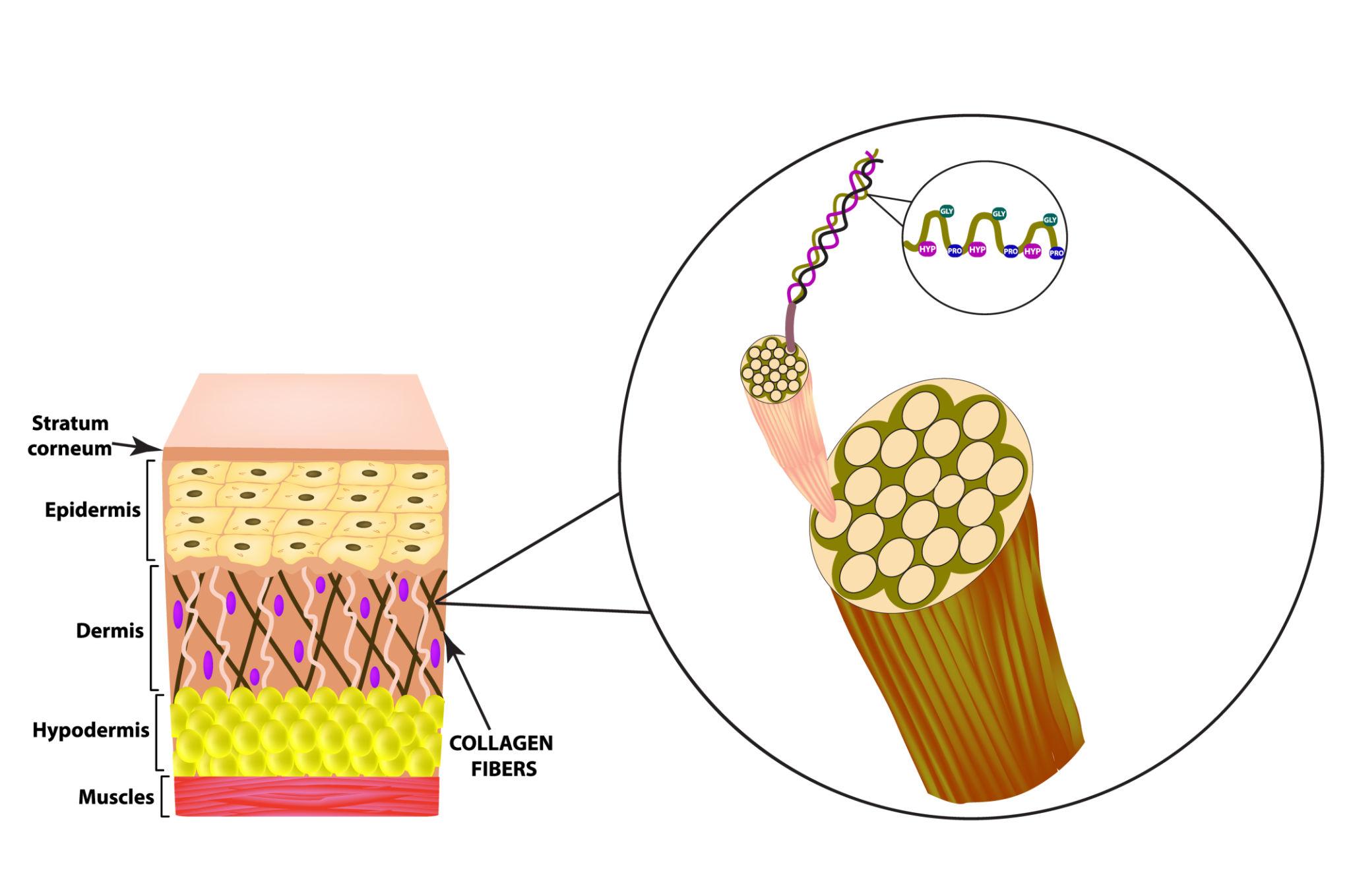
There are several different types of collagen, each with its own structure and biological role. This is why understanding collagen types is useful when comparing supplements.
Does collagen production decrease as we age?
Natural collagen production and the condition of collagen-containing tissues change as we get older.
Age is one factor, but it isn’t the only one. Genetics, environmental exposure, nutrition, smoking, ultraviolet radiation and other lifestyle factors can also influence skin and connective-tissue health.
This is one reason collagen has become such a popular subject within the healthy-aging market.
People often begin researching collagen when they notice changes in skin appearance, are interested in maintaining their physical activity, or want to understand how nutrition contributes to overall wellness.
It’s important to distinguish between the body’s natural collagen production and taking a collagen supplement. Consuming collagen does not simply replace collagen in a particular part of the body.
The body digests dietary proteins into smaller components, which are then used in various biological processes.
Understanding this distinction helps put many collagen supplement claims into perspective.
2. What Are the Potential Benefits People Research About Collagen?
When people search for collagen supplements, they are usually looking for information about a particular area of health or appearance.
Some of the most common areas of interest include skin appearance, hair and nails, joint health and healthy aging.
Let’s examine each area and what the available research tells us.
Skin appearance, hydration and elasticity
Skin is one of the most frequently researched areas of collagen supplementation.
Collagen is an important structural component of the skin. As we age, changes in collagen structure and production contribute to the natural aging process.
People researching collagen for skin commonly want to understand:
- Skin hydration
- Skin elasticity
- The appearance of fine lines
- Changes associated with aging
- The relationship between nutrition and skin health
There have been numerous clinical studies investigating oral collagen supplementation and skin-related measurements.
However, the quality and conclusions of these studies vary.
A particularly important 2025 systematic review and meta-analysis published in The American Journal of Medicine examined 23 randomized controlled trials involving 1,474 participants.

Although the overall analysis found improvements in certain skin measurements, the researchers reported that studies without pharmaceutical-industry funding did not demonstrate the same benefits. Higher-quality studies also failed to show significant improvements.
The authors concluded that there was currently no clinical evidence supporting the use of collagen supplements to prevent or treat skin aging.
You can read the full 2025 collagen research review on PubMed here.
This is worth understanding before choosing a supplement. Research into collagen continues, but promising results from individual studies should not be interpreted as guaranteed outcomes.
Hair and nail health
Hair and nails are another reason people explore nutritional supplements.
Searches in this category often include:
- What nutrients support normal hair growth?
- What contributes to healthy nails?
- Is collagen a complete protein?
- What is the difference between collagen peptides and other protein powders?
- Which ingredients are commonly included in hair and nail supplements?
Protein and several micronutrients play important roles in normal hair and nail biology.
Biotin, for example, is a nutrient involved in normal metabolic processes. However, biotin supplementation is not automatically beneficial for someone who already gets enough through their diet.
Collagen itself has not been established as a treatment for hair loss, thinning hair or brittle nails.
If you are experiencing noticeable changes in hair or nail health, it’s worth discussing possible nutritional or medical causes with a healthcare professional.
Joint and connective-tissue health
Collagen is naturally found in cartilage, tendons, ligaments and other connective tissues.
This explains why joint-related searches are common within the collagen category.
People researching this area often want to understand:
- The relationship between collagen and cartilage
- Different collagen types for joint research
- Collagen peptides versus undenatured collagen
- Nutrition and connective-tissue health
- How supplements fit into an active lifestyle
Some clinical studies have examined collagen supplementation and joint-related outcomes. Findings vary according to the type of collagen, formulation, serving amount, research methodology and population studied.
It’s important not to interpret these findings as proof that a collagen supplement can treat arthritis, joint injuries or chronic pain.
For anyone interested in joint health, maintaining an appropriate exercise routine, balanced nutrition, muscle strength and adequate recovery remain important considerations.
Muscle, bones and an active lifestyle
Collagen is also present in structures throughout the musculoskeletal system.
People who exercise regularly may be interested in understanding the relationship between protein intake, connective tissue and physical activity.
One important distinction is that collagen is not a complete protein source in the same way as many conventional dietary proteins.
It does not provide all essential amino acids in the proportions required to serve as a sole protein source.
For this reason, collagen should not replace other dietary protein sources.
A balanced diet, appropriate resistance training, recovery and sufficient sleep remain important foundations of an active lifestyle.
What does the research tell us overall?
Collagen is an interesting area of nutritional research, but evidence varies considerably depending on the collagen type and outcome being studied.
A study investigating one particular collagen ingredient cannot automatically establish the effectiveness of another ingredient or a finished multi-ingredient product.
This distinction becomes particularly important when comparing supplement brands.
3. Understanding the Different Types of Collagen
Not all collagen is the same.
Researchers have identified numerous collagen types, but Types I, II and III are particularly relevant when discussing dietary supplements.
Type I collagen
Type I is the most abundant collagen type in the human body.
It is found in skin, bones, tendons and other connective tissues.
Marine and bovine collagen products commonly contain Type I collagen peptides.
Type II collagen
Type II collagen is particularly associated with cartilage.
It is frequently discussed in products that focus on cartilage and joint-related research.
Chicken sternum is one source used in certain Type II collagen ingredients.
Type III collagen
Type III collagen is found in tissues such as skin, blood vessels and organs.
It is often discussed alongside Type I collagen in bovine-derived products.
Marine, bovine and chicken collagen: What’s the difference?
The source of collagen is another important consideration.
Marine collagen
Generally derived from fish skin or scales. It is commonly associated with Type I collagen peptides.
Bovine collagen
Derived from cattle, typically hides or other connective tissues. It commonly supplies Type I and Type III collagen.
Chicken collagen
Certain chicken-derived collagen ingredients provide Type II collagen, making them relevant to a different area of collagen research.
Neither marine nor bovine collagen is automatically superior. The collagen type, processing method, formulation, quality and available research all matter.
Dietary restrictions and allergies are also important. Marine collagen is fish-derived, while bovine and chicken collagen are animal-derived.
4. Collagen Powder, Capsules, Gummies or Drink Mixes?
Another common question is which collagen format is best.

There isn’t one format that is automatically right for everyone. Convenience, serving size, ingredients, taste and personal preferences all influence the decision.
| Format | What to consider |
|---|---|
| Powder tubs | Flexible serving sizes, but require measuring |
| Capsules | Convenient, but may require multiple capsules |
| Gummies | Easy to take, but check added sugars and serving size |
| Ready-to-drink | Convenient, but consider storage and packaging |
| Single-serve drink mixes | Pre-portioned, portable and easy to prepare |
Is liquid collagen better than powder collagen?
Not necessarily.
The physical format alone does not establish the quality or effectiveness of a collagen product.
Amare’s product information explains that a collagen powder mixed with water does not become superior or inferior simply because of its physical presentation.
What matters more is the formulation, ingredient quality, serving information and whether the product is appropriate for your individual needs.
A single-serving drink mix can be an appealing option for someone who prefers not to measure powder from a large container.
5. What Should You Look for When Choosing a Collagen Supplement?
With so many products available, it helps to have a checklist before making a purchase.
Here are eight considerations worth keeping in mind.
1. Understand the collagen source.
Is the collagen marine, bovine or chicken-derived? This matters for dietary preferences, allergies and understanding the formulation.
2. Look at the collagen types.
Check whether the product contains Type I, Type II, Type III or a combination.
3. Read the complete ingredient list.
Don’t rely exclusively on the front of the packaging. Look at all active ingredients, additional nutrients, sweeteners, flavouring components and allergen information.
4. Understand the serving size.
A product may contain a certain number of servings rather than a full month’s supply. Compare the actual cost per serving.
5. Look for transparent research.
Does the company provide research on the actual finished product, or does it refer to studies on individual ingredients?
These are not interchangeable.
6. Consider convenience.
Will you realistically use the product? A format that fits your daily routine may be more practical than something requiring several preparation steps.
7. Consider allergies and dietary requirements.
Check the source of every ingredient and any relevant allergen information.
8. Choose a reputable supplier.
Look for clear product information, appropriate quality documentation, transparent labelling and accessible customer support.
6. Introducing Amare NeuCollagen
If you have been researching collagen drink mixes, Amare NeuCollagen is one product worth examining in more detail.
NeuCollagen is a multi-ingredient collagen drink mix supplied in individual stick packs.
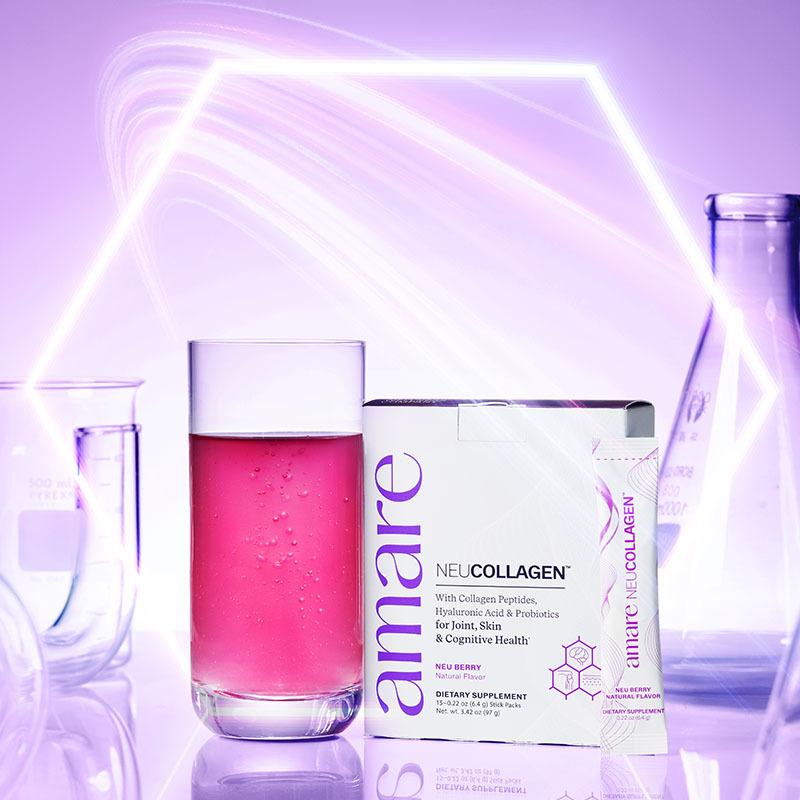
Rather than being a conventional single-source collagen powder, Amare describes it as a proprietary formulation combining three collagen sources with additional ingredients.
The formulation includes:
- Chicken-derived Collavant® n2 collagen
- Marine-derived GPX-4™ collagen peptides
- Bovine-derived bioactive collagen peptides
- Mobilee® hyaluronic acid matrix
- Dermial®
- Cerebiome® probiotic
- Additional ingredients including biotin, vitamin C, vitamin B12, resveratrol and L-Dopa
For the most accurate and current ingredient information, review the official Amare NeuCollagen product information and the complete product label.
Understanding the multi-source formulation
One distinguishing feature is that NeuCollagen combines collagen from three different animal sources rather than relying on a single source.
It also includes additional ingredients, including a hyaluronic acid matrix and probiotic technology.
This makes it important to read the complete ingredient list rather than evaluating the product simply by the word collagen on the front of the package.
An important point about research: studies on individual ingredients do not establish that the finished NeuCollagen formula produces the same outcomes. Amare’s product information should be reviewed alongside the available research on the individual ingredients.
NeuCollagen is not a plant-based product and is not suitable for someone avoiding animal-derived ingredients.
What comes in the NeuCollagen box?
NeuCollagen is supplied in a 15-serving box containing individual stick packs.
Each serving is pre-portioned, which removes the need to measure powder from a larger container.
The mixed berry flavour offers an alternative to unflavoured collagen powders.
For someone who travels, works away from home or prefers a pre-measured serving, the individual packaging is a practical feature to consider.
7. How Do You Use Amare NeuCollagen?
According to Amare’s product instructions, one stick pack is mixed into 8–12 fluid ounces of water or another beverage of your choice.
Amare also notes that some people prefer using a smaller amount of liquid for a more concentrated taste.
A few practical considerations:
- Follow the serving instructions on the product packaging.
- Do not add the product to boiling or scalding temperatures.
- Store in a cool, dry place.
- Keep out of reach of children.
- Review the complete ingredient and allergen information before use.
You can make it part of a regular routine without complicated preparation.
For example, you might choose to prepare your drink alongside breakfast or another regular part of your day.
The best routine is one that fits naturally into your lifestyle.
For the latest preparation information, visit Amare’s NeuCollagen Frequently Asked Questions.
8. Who Might Be Interested in Exploring NeuCollagen?
A product should be evaluated according to its actual ingredients, intended use and suitability rather than promises about specific results.
NeuCollagen may be of interest to adults who:
- Are researching multi-source collagen formulations.
- Prefer a pre-portioned drink mix instead of measuring powder.
- Want to compare marine, bovine and chicken-derived collagen.
- Are interested in understanding products that combine collagen with additional ingredients.
- Prefer a flavoured beverage format.
- Want to compare a 15-serving product with larger packages.
It is not designed for children or teenagers.
People who are pregnant, nursing, taking prescription medication or managing a medical condition should consult their healthcare professional before considering the product.
Anyone with a fish or other relevant food allergy should carefully review the label and seek professional advice where appropriate.
9. Frequently Asked Questions About Collagen Supplements
What does collagen do in the body?
Collagen is a structural protein found in skin, bones, cartilage, tendons, ligaments and other connective tissues. It helps provide structure and support throughout the body.
Why do people take collagen supplements?
People commonly explore collagen supplements because they are interested in skin appearance, hair and nail care, joint health and healthy aging. Research is ongoing, and results vary depending on the formulation and the individual.
Does collagen production decrease with age?
Natural collagen production and the condition of collagen-containing tissues change as people get older. Genetics, lifestyle and environmental factors also contribute.
Are all collagen supplements the same?
No. Products differ in collagen source, collagen type, processing, serving size, additional ingredients and formulation.
Is marine collagen better than bovine collagen?
Neither is automatically better. Marine collagen is commonly associated with Type I collagen peptides, while bovine collagen commonly supplies Type I and Type III. The most appropriate choice depends on the product and individual requirements.
Is liquid collagen better than powder collagen?
Not simply because it is liquid. The ingredients, formulation, quality and serving size are more meaningful comparison points than whether the product is sold as a liquid or powder.
How much collagen should I take?
There is no single universal amount that applies to every collagen product. Research uses different collagen types and serving amounts. Always follow the specific product label and consult a qualified healthcare professional if you are unsure.
How long does a 15-count NeuCollagen box last?
At one stick pack per day, a 15-serving box provides 15 daily servings.
Amare also offers a 30-day pack consisting of two 15-serving boxes, subject to current availability.
Is Amare NeuCollagen plant-based?
No. It contains collagen derived from chicken, fish and bovine sources.
Does NeuCollagen contain caffeine?
According to Amare’s product information, NeuCollagen is caffeine-free.
Does NeuCollagen contain sugar?
Amare’s product information lists less than one gram of sugar per serving. Check the current product label for the latest nutritional information.
Can I combine NeuCollagen with other Amare products?
Amare provides product information about using NeuCollagen alongside other products. However, anyone taking medication or managing a health condition should check with their healthcare professional before combining supplements.
Is NeuCollagen suitable for everyone?
No supplement is suitable for everyone. Adults should review the complete ingredient list, consider allergies and dietary requirements, and seek professional advice where appropriate.
10. NeuCollagen and EDGE+ Grape: Two Different Product Formats
If you have been exploring Amare products, you may also have come across EDGE+ Grape.
Both products are drink mixes, but they are different formulations with different ingredient profiles and product positioning.
NeuCollagen is a multi-source collagen formula supplied in individual stick packs.
They should be evaluated independently rather than assuming that one replaces the other.
If you’re interested in learning more about EDGE+ Grape, look for our separate in-depth guide on My Gut Health Matters.
11. Where Can You Find Amare NeuCollagen?
If you would like to review the full product details, packaging, current pricing and ordering options, you can visit the official Amare product page.
Explore Amare NeuCollagen – Official Product Page
Before ordering, review the latest ingredient information, serving instructions, pricing, shipping conditions and return policy.
You can also find information about recurring orders through Amare Subscribe & Save.
Final Thoughts: Making an Informed Collagen Choice
Collagen is an interesting area of nutrition and wellness research, and there is a reason it continues to attract attention.
But choosing a supplement should involve more than following a trend or believing every benefit advertised on a product page.
Understanding collagen types, ingredient sources, research quality, serving sizes and product transparency puts you in a much better position to make an informed decision.
Amare NeuCollagen offers a multi-source collagen formulation in a convenient single-serving format. Whether it fits your preferences depends on the ingredients, your dietary requirements, your budget and the type of product you are looking for.
The best approach is to become an informed consumer, understand what you’re purchasing and make decisions that are appropriate for your individual circumstances.
At My Gut Health Matters, our goal is to make wellness information easier to understand, help readers explore the research and encourage informed decisions.
Important disclaimer: This article is for general educational purposes only and is not medical advice. The statements about dietary supplements have not been evaluated by the U.S. Food and Drug Administration. Amare NeuCollagen is not intended to diagnose, treat, cure or prevent any disease. Individual experiences vary. Consult a qualified healthcare professional before starting a new supplement, particularly if you are pregnant, nursing, taking medication or have a medical condition.
Affiliate disclosure: My Gut Health Matters is an independent Amare Brand Partner. We may earn a commission when you purchase through qualifying links at no additional cost to you.